AC Drain and Attic Leak Damage in Flower Mound, TX
Most Flower Mound air handlers sit in the attic, right above the bedrooms. When a condensate line clogs or a drain pan rusts through, the water soaks the insulation first and the ceiling second. The drying team dries the attic, the ceiling and the walls below it.
(888) 527-9134AC dripping through a Flower Mound ceiling? Call now- 24/7 dispatch
- Attic moisture mapping
- Ceiling drying
- Daily moisture readings
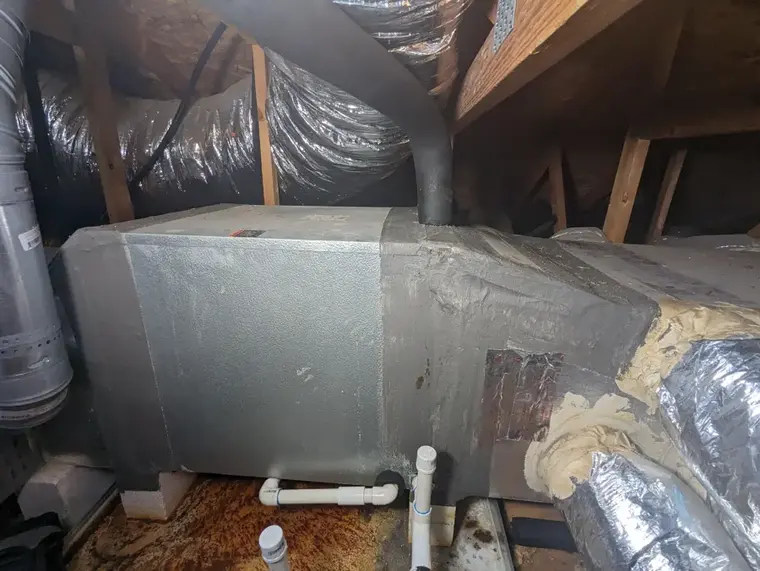
How AC drain and attic leak damage is handled in Flower Mound
Trace the wet area
Thermal imaging from the room below and meters in the attic show how far the condensate spread along the joists and insulation.
Remove soaked insulation
Wet blown-in or batt insulation holds water against the ceiling, so the mitigation team bags and removes it where readings demand.
Dry the ceiling in place or cut it
Drywall that is sound gets dried with air movers and dehumidifiers; sagging sections come down cleanly.
Log it to dry
Readings on the joists, decking and ceiling go in the daily log until the drying goal is met.
What to do the moment you find water dripping from the attic
Turn the AC off at the thermostat
That stops new condensate from forming while the drain is clogged.
Put a bucket under the drip
If the ceiling is bulging, poke a small hole at the low point to let the water out in one place.
Keep people out from under a sagging ceiling
Wet drywall can drop without warning.
Photograph the ceiling and the unit
Photos of stains, the drain pan and any float switch help the HVAC tech and the adjuster.
What does AC drain and attic leak damage cost in Flower Mound, TX?
In Flower Mound, TX, AC drain and attic leak water damage typically runs $900 to $3,500 when the leak was caught early and the wet area is one ceiling, and $3,500 to $9,000 when insulation, several ceilings and walls below are wet. The HVAC repair is separate. How long it dripped and how much insulation is soaked set the number.
One ceiling, caught early
$900 to $3,500
- Ceiling drying in place
- Small insulation removal
- Three to four day dry-out
Several rooms below
$3,500 to $9,000
- Ceiling sections removed
- Attic insulation out
- More dehumidifiers
Long slow leak
$9,000 to $16,000+
- Walls and flooring below
- Extended attic drying
- Antimicrobial where needed
For a planning number on your own loss, try the water damage cost calculator. The final figure comes from the on-site walkthrough and the moisture map.
A North Texas summer keeps an air conditioner running for months, and an attic air handler can pull gallons of water out of the air on a humid day. That water runs down a small PVC condensate line. When algae, dust or a sagging pipe blocks it, the water backs up into the primary pan, then the secondary pan, and then onto the attic floor.
Why attic leaks hide so well
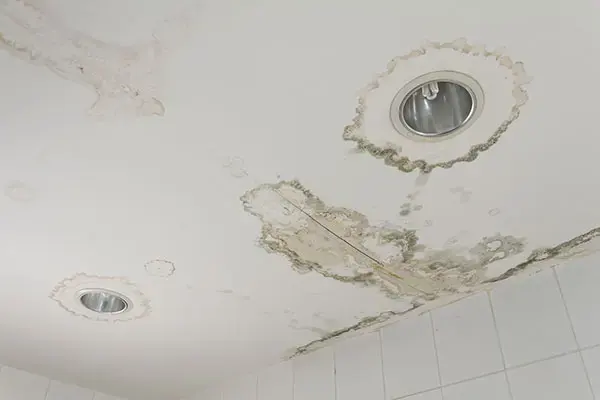
Blown-in insulation soaks up a lot of water before anything shows on the ceiling below. By the time a brown ring appears, the insulation, the top of the drywall and the joists are often wet across a wider area than the stain suggests. That is why the tech who does the walkthrough maps the attic side as well as the room below.
- A rusted secondary drain pan that no longer holds water.
- A clogged or disconnected condensate line.
- A float switch that failed or was never installed.
- Condensation dripping from uninsulated ductwork on humid days.
Drying an attic and the ceiling below
The mitigation team pulls wet insulation, dries the decking and joists with air movers and dehumidifiers, and decides whether the ceiling drywall can be dried in place. Drywall that sags or stays wet after a day or two usually comes down in a clean section rather than being patched over. Water that sat for days on a warm attic floor can turn Category 2, which changes what can be saved.
Getting the HVAC side fixed
An HVAC technician clears the drain, replaces a failed pan and adds or tests the float switch. The restoration side handles the water damage and keeps the photos and daily readings the adjuster asks for. Keeping the drain clear is ordinary maintenance; the Energy Saver program covers air conditioner upkeep, and NWS Fort Worth tracks the heat and humidity that keep condensate lines working hard.
AC Drain and Attic Leak Damage questions
Why is my AC leaking through the ceiling?
Usually a clogged condensate line, a rusted drain pan or a failed float switch in the attic. The water overflows the pan and soaks the insulation and ceiling below.
Should I turn the AC off?
Yes, at the thermostat, until the drain is cleared. That stops new condensate from forming. In a heat wave, fans and closed blinds help while the repair happens.
Can a wet ceiling be saved?
Often, if it is caught early and the drywall is not sagging. The drying team dries it in place and checks it with meters. Sagging or crumbling sections are removed.
Does wet attic insulation have to be replaced?
Soaked blown-in insulation usually comes out because it stays wet and holds water against the ceiling. Lightly damp areas can sometimes dry.
Is an AC leak covered by insurance?
Water damage from a sudden overflow is often covered, while damage from long-term neglect may not be. Coverage depends on your policy, so it is worth checking with your own insurer.
How can this be prevented?
Have the condensate line flushed each spring, confirm a float switch is installed and working, and replace a rusted secondary pan before it fails.
Related water damage services in Flower Mound

Covering Flower Mound 75022, 75027 and 75028
The Flower Mound restoration crew works every part of town, from Bridlewood and Wellington to Lakeside on Grapevine Lake, plus Highland Village, Lewisville, Double Oak, Copper Canyon, Argyle, Bartonville, Grapevine, Coppell.
See every Flower Mound area coveredWater coming through the ceiling under the AC?
A condensate leak runs every time the system cycles. Drying the attic and ceiling early keeps the removal to a patch.