Structural Drying in Flower Mound, TX
Surface dry is not dry. Structural drying pulls water out of the framing, drywall, subfloor and slab, and the equipment stays until the readings match a dry reference in the same house.
(888) 527-9134Flower Mound walls still wet? Start the dry-out now- 24/7 dispatch
- IICRC S500 drying standard
- LGR dehumidifiers
- Daily psychrometric logs
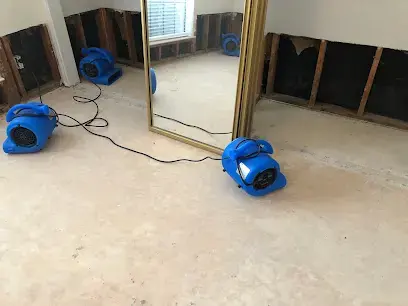
How structural drying is handled in Flower Mound
Map the moisture
Pin and pinless meters and thermal imaging map every wet material before equipment goes down.
Size the equipment
Air movers go in to match each room's evaporation load, with LGR or desiccant dehumidifiers to match the class.
Log every day
Temperature, humidity and material readings go in a psychrometric log daily.
Pull on readings
Equipment comes out room by room as each reaches the drying goal.
What to do the moment you find wet walls and floors
Keep the AC running
Cool, dry indoor air helps. Do not turn the heat way up, which can move moisture around.
Leave wet walls alone
Do not paint, patch or cover damp drywall before it reads dry.
Clear the floor
Move furniture and rugs so air can reach the wet areas.
Keep a note of the source
What leaked, when it started and when it was stopped all help set the drying plan.
What does structural drying cost in Flower Mound, TX?
In Flower Mound, TX, structural drying typically runs $1,200 to $4,000 for a contained Class 1 or 2 loss over three to five days, and $4,000 to $12,000 for larger Class 3 or 4 losses that need desiccants, mats and a longer log. The number of rooms, the material class and how fast drying started set the number.
Contained Class 1 to 2
$1,200 to $4,000
- Air movers and one or two LGR units
- Three to five days
- Daily readings
Several rooms, Class 3
$4,000 to $12,000
- More equipment
- Wall cavity drying
- Longer log
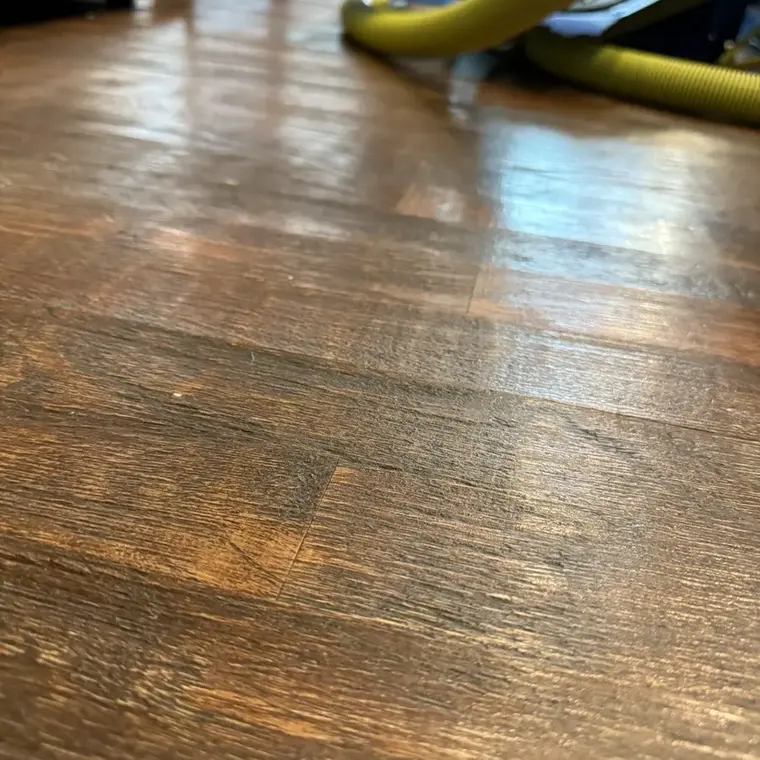
Class 4 slab or hardwood
$12,000 to $22,000+
- Desiccants and mats
- Dense materials
- Extended monitoring
For a planning number on your own loss, try the water damage cost calculator. The final figure comes from the on-site walkthrough and the moisture map.
IICRC S500 is the industry standard for professional water damage restoration. It describes how to classify a loss, how to set up drying equipment and how to confirm the structure is actually dry. Structural drying is where that standard does most of its work.
Category and class set the plan
Category 1, 2 and 3 describe how clean the water is. Class 1 through 4 describe how much water the materials absorbed and how hard they are to dry. A Class 1 loss is a small area of low-porosity materials; Class 4 means dense materials like hardwood, plaster or a concrete slab. Class 1 through 4 sets how much equipment a room needs.
The equipment and what it does
- Air movers move air across wet surfaces to speed evaporation, set to the room's load.
- LGR (low grain refrigerant) dehumidifiers pull that moisture out of the air.
- Desiccant dehumidifiers handle dense Class 4 materials and cooler conditions.
- Injection and cavity drying push dry air into walls and under cabinets.
- Thermal imaging and pinless meters find water behind walls.
The drying goal
Drying is finished when wet materials read within 2 to 4 points of a dry reference, the same material in an unaffected part of the same house. The drying team records readings every day in a psychrometric log, and equipment leaves on readings, not on a schedule. In a Flower Mound summer, the humidity outside is high, so the house is kept closed and dehumidified rather than opened up.
The EPA publishes guidance on indoor air after water damage, and NIST publishes building science research on moisture in homes.
Structural Drying questions
What is IICRC S500?
It is the industry standard for professional water damage restoration, covering how losses are classified, how drying equipment is set and how dryness is verified.
Why not just open the windows?
North Texas air is often humid. Opening the house can add moisture. Closed-house drying with dehumidifiers controls the conditions.
How long does structural drying take?
A contained Class 1 or 2 loss usually dries in three to five days. Class 4 materials like hardwood and slabs take longer.
Why is so much equipment needed?
Each room's evaporation load and class decide the number of air movers and dehumidifiers. Too little equipment stretches the job and risks growth.
Can drying be done with the walls closed?
Often, with small access holes and cavity drying. A flood cut is used when readings or contamination demand it.
Who decides when the house is dry?
The readings do. Wet materials must match a dry reference within 2 to 4 points, and the daily log shows it.
Related water damage services in Flower Mound

Covering Flower Mound 75022, 75027 and 75028
The Flower Mound restoration crew works every part of town, from Bridlewood and Wellington to Lakeside on Grapevine Lake, plus Highland Village, Lewisville, Double Oak, Copper Canyon, Argyle, Bartonville, Grapevine, Coppell.
See every Flower Mound area coveredWalls, floors or a slab still wet in Flower Mound?
Drying to a reading, not a feeling, is what keeps a water loss from coming back later.